
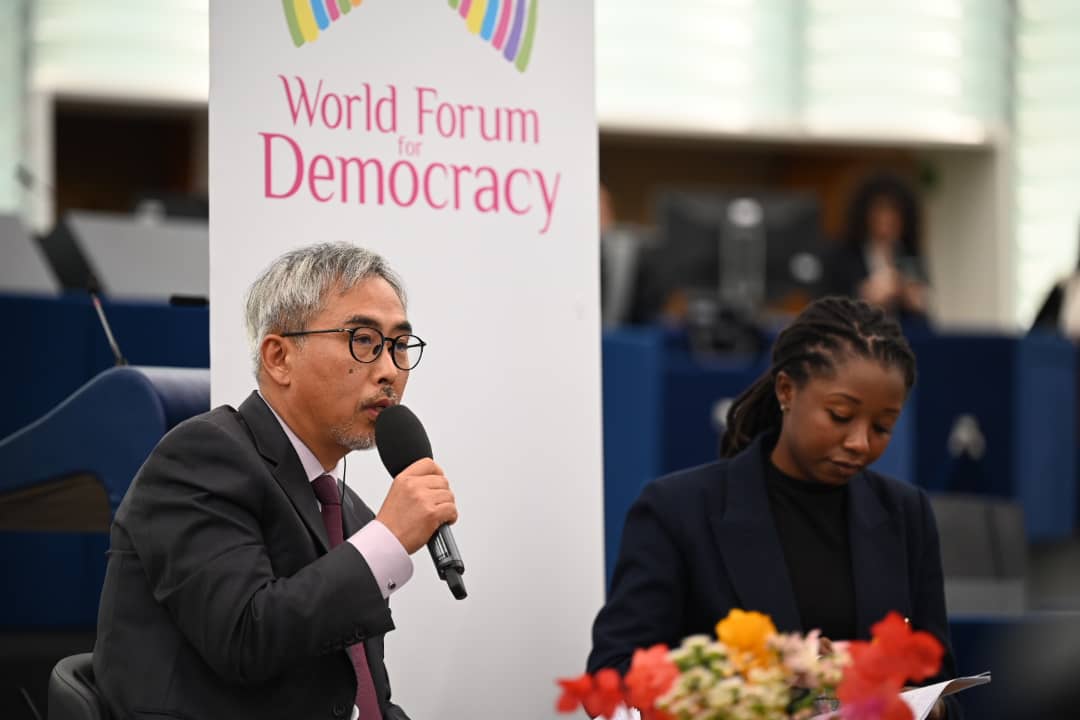

The World Democracy Forum, a flagship event organized each year by the Council of Europe, is a forum for reflection and dialogue on global democratic issues. The 2023 edition, held in Strasbourg, saw political leaders, researchers, activists and international organizations gather around the ambitious theme: “Democracy = Peace?”. This question echoes a global reality where democracy, although a widely held ideal, sometimes struggles to translate into lasting peace in certain regions of the world.
One of the particularly interesting sub-themes of the 2023 forum was “New modes of conflict resolution”, a topic which was addressed from both a regional and global perspective, and in which the JAMAA Great Lakes organization played a key role.
Democracy: a path to lasting peace?
The central question of the forum, “Democracy = Peace?”, raises a complex debate: is democracy, with its principles of freedom, equality and citizen participation, the remedy for the conflicts that devastate certain regions of the world? Or is it a utopia, given the varied geopolitical and cultural realities?
The link between democracy and peace is fundamentally linked to the idea that democratic regimes, by providing a space for participation and dialogue, enable disputes to be resolved peacefully, without recourse to violence. However, the question remains open: in contexts where democratic institutions are fragile, or where societies are deeply divided, can democracy alone guarantee peace?
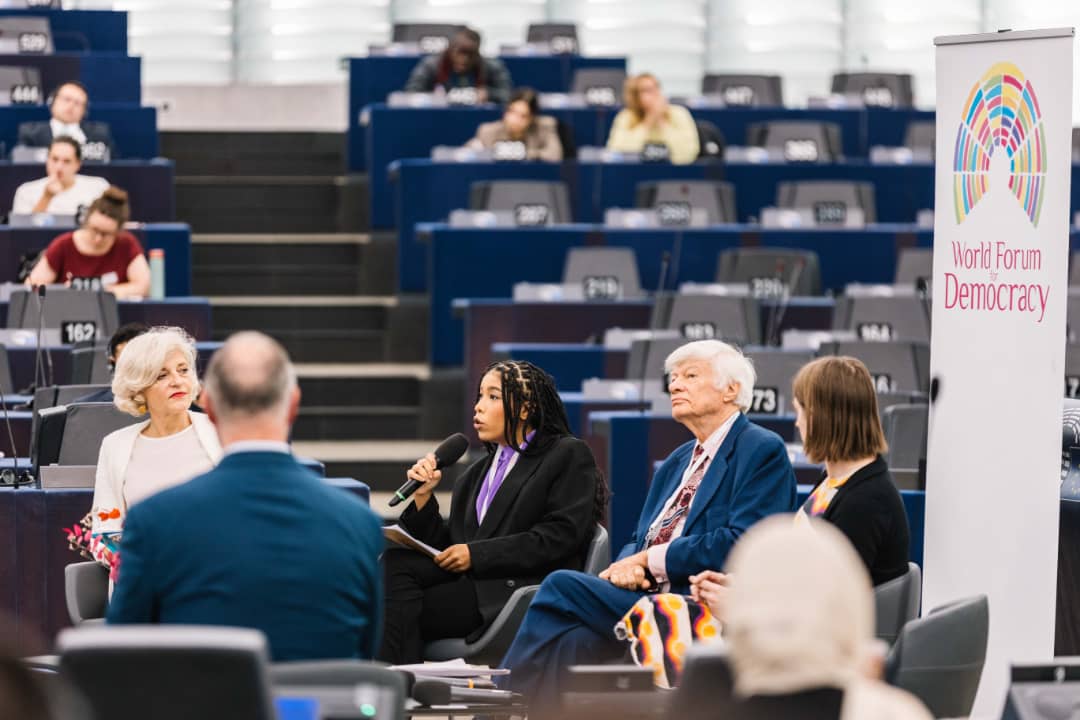
JAMAA Great Lakes: Contribution to the Sub-theme on New Modes of Conflict Resolution
JAMAA Grands Lacs, a regional organization committed to promoting peace and democracy in Africa's Great Lakes region, contributed to the debate, particularly on new approaches to conflict resolution.
JAMAA Grands Lacs is an organization that brings together several players from civil society, government institutions and international organizations. For several years now, it has been working for the peaceful management of conflicts in a region marked by ethnic, political and social tensions. In its presentation, the organization highlighted several important points:
1. Mediation and Inclusive Dialogue
Drawing on its experience, JAMAA Grands Lacs stressed the importance of mediation and inclusive dialogue as effective methods of conflict resolution. In Africa's Great Lakes region, where many conflicts have erupted due to exclusion or lack of dialogue between groups, these methods are essential. The organization cited several examples of successful mediation, notably in countries such as the Democratic Republic of Congo and Burundi, where dialogues between governments and armed groups have laid the foundations for community reconciliation and social peace.
In this context, inclusiveness is essential. Peace processes must include not only traditional political players, but also local communities, women and young people, who are often the most affected by conflict.
2. New Technologies at the Service of Peace
Another crucial aspect of new conflict resolution methods, according to JAMAA Grands Lacs, is the use of new technologies. The organization has highlighted pilot projects using digital platforms to promote dialogue, mutual understanding and conflict prevention. These tools make it possible to overcome geographical barriers and reach a wider audience, while strengthening citizen involvement in peace processes.
Social networks and mobile applications play a key role in mobilizing young people, enabling them to spread peace messages, moderate discussions and act as intermediaries in crisis situations.
3. Participatory diplomacy
JAMAA Grands Lacs has also focused on the concept of participatory diplomacy, which enables civil society, local communities and often marginalized populations to play an active part in peace negotiations. This model is seen as a way of deepening democratic processes, giving them a local dimension and strengthening the legitimacy of peace agreements.
By involving citizens in substantive discussions, participatory diplomacy transforms simple peace agreements into genuine democratic constructions. This ensures that the agreements signed meet the needs of the people and are more easily implemented on the ground.
4. Shared Governance and Conflict Prevention
Finally, JAMAA Grands Lacs stressed that to avoid conflict, it is imperative to strengthen shared governance. This implies more transparent management of resources, better distribution of power and greater responsiveness to the needs of different communities. The shared governance model fosters lasting peace, as it combats the inequalities and exclusion that fuel tensions.
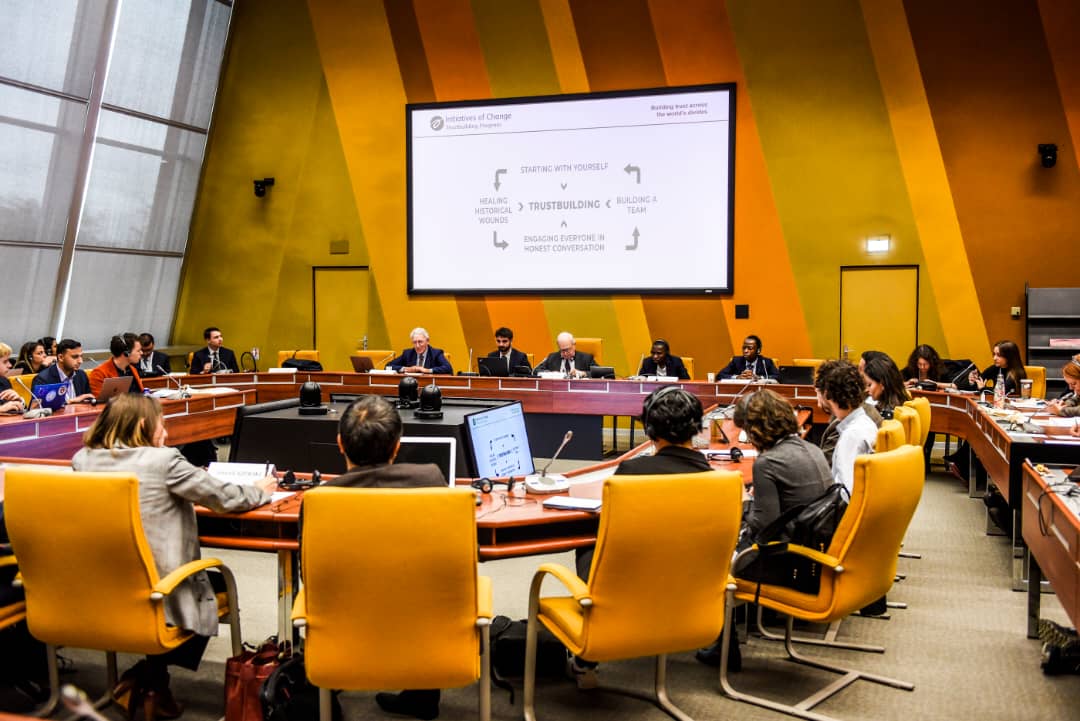
Democracy, a Process in Progress
The 2023 edition of the World Democracy Forum clearly showed that democracy is a powerful tool in conflict resolution, but it cannot automatically guarantee peace. It must be accompanied by mechanisms for dialogue, citizen participation and inclusive governance.
JAMAA Grands Lacs, through its contribution to the forum, has demonstrated that there are promising new approaches, such as mediation, the use of technology and participatory diplomacy, which can strengthen democracy while providing concrete solutions to conflicts. In an increasingly interconnected world, these innovative methods could become keys to lasting peace and the flourishing of democratic societies.