
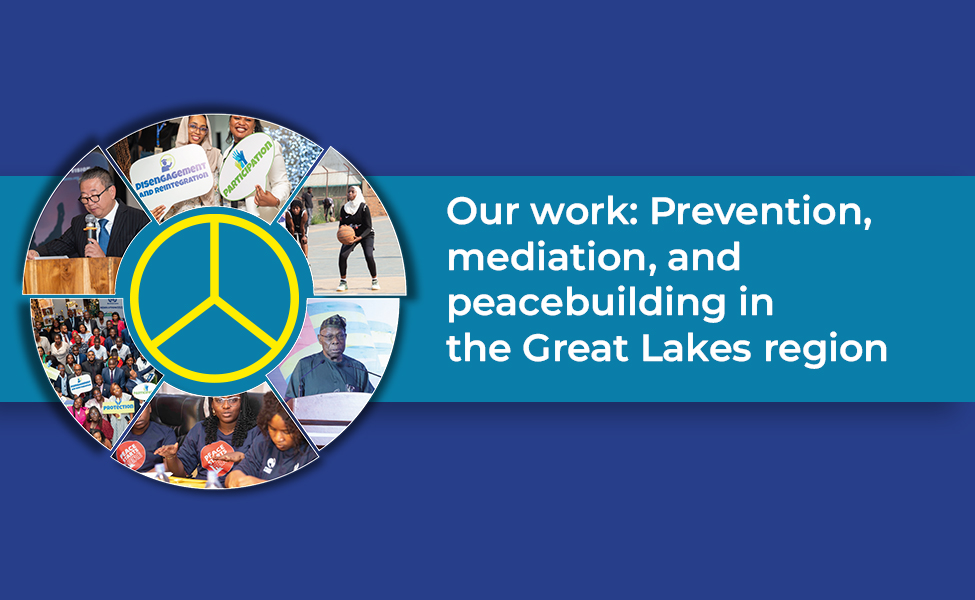
The year 2025 marked a major milestone for JAMAA Grands Lacs. It marked ten years since the founding idea of the organization first emerged.
In 2016, the creation of a space for intercultural encounter and restorative fraternity became a necessity. In a personal and regional context marked by profound existential questions, it became urgent to open a path that would bring meaning and hope.
The ideal of a shared humanity, where others are recognized as brothers and sisters, was gradually fading from the collective consciousness. Identity divisions, prejudice, and hate speech were gaining ground. Otherness was perceived as a threat. Tribal, ethnic, and national affiliations became dividing lines, fueling dynamics of exclusion and confrontation in the Great Lakes region.
At the same time, previous generations passed on stories marked by violence, fanaticism, and collective trauma. These narratives fueled mistrust, revenge, and domination among young people. Violence, both internal and external, tended to become normalized.
Young people, who are the future, found themselves trapped in a painful legacy, with no clear guidelines for building a peaceful and prosperous region. The spirit of Ubuntu: “I am because we are” was weakening. The fragmentation of human identity led to profound social breakdown. The population, particularly women, young people, and children, paid the heaviest price.
Faced with the predominance of negative narratives and judgments based on hearsay, it became essential to create a space for authentic encounter. A place where discovering the real face of the other would be a collective responsibility. A setting that fostered critical thinking, freedom of conscience, and the ability to distance oneself from discourse and manipulation.
The conviction was clear: it is by encountering others in their truth, in their wounds as well as in their dignity, that we restore our own humanity and make possible a bond of mutual aid and harmony.
From one quality relationship to another, the ambition was to create a community with a shared destiny. A community of men and women aware of the sacred nature of human life and committed to protecting it. To move beyond identity-based divisions and recognize the transcendent dignity in each person.
Thus was born an initial core, comparable to the African baobab tree under which disputes are settled. In the face of the obscurantism of violence, primacy was given to reason, dialogue, and the common good. This core became the prototype of our commitment: to revitalize living together, promote inter-community reconciliation, and make dialogue a constant practice.
This framework was intended to serve as a bridge between cultures, countries, and civilizations. It aimed to transform diversity into a lever for cooperation and the building of sustainable communities. It was about learning to evaluate the pride of being different in terms of the happiness of being together, according to the thinking of Léopold Sédar Senghor.
The name “JAMAA/Family” became a symbol and a guiding principle. It represented a beacon of hope for those who felt marginalized, deprived of reference points and meaning. The approach was based on listening to oneself and others, forgiveness, inner reconciliation, and a commitment to reaching out first.
This vision gave rise to an organization that is now firmly established. Thousands of beneficiaries have been supported in their psychological, social, and community reconstruction. The organization helps transform wounded individuals into agents of peace and stability. It contributes to the emergence of a regional community based on service, solidarity, and shared dignity.
Survivors of violence have regained their dignity and their central role within their families. Children and young people exposed to violence, marginalization, or school dropout have regained hope and perspective. Many have become responsible leaders, committed to promoting peace on a daily basis.
While the culture of violence remains a reality in the Great Lakes region, our ambition is for JAMAA to span generations. We want it to be a cornerstone of an African society based on peace, active fraternity, and the unconditional protection of human life.
May the freedom of each individual become an opportunity for everyone to flourish in respect, love, and harmony.